


Extraordinary Missions and the Power of AI with Seth Barnes
Quick Summary: On a recent episode of the Be Unbound podcast, Seth Barnes explores how AI is reshaping global missions, education, and discipleship—and how young Christians can get involved.
Recently on the Be Unbound podcast, I had the opportunity to speak with missionary entrepreneur Seth Barnes, and in this article I will be sharing part of that conversation with you.
I like to say that at Unbound we’re fascinated by “extraordinary at ordinary” people—those who live faithfully in ways that don’t always make headlines, but that quietly shape the world.
By that definition, Seth Barnes is not ordinary at all.
Before I ever knew his name, I knew his work. I’d heard stories of Adventures in Missions and the World Race. We’ve had friends and Unbound students go through his programs. When he reached out after listening to our podcast and we finally spoke, I realized very quickly: this is a man with more to teach me than we could ever fit into one conversation.
By God’s grace, that first conversation wasn’t the last. Now our teams get to work together as Seth and his staff run the AI track inside our Ascend program. We talked about AI—but the most gripping part of our conversation is Seth’s own story: from a curious kid and college entrepreneur to a young man in a Cambodian refugee camp, to launching global missions movements, to harnessing AI for kingdom work.
The future of education in your inbox.
Get productivity tips, commentary, and Unbound updates sent to you!
How Did Seth Barnes Go from College Entrepreneur to Missionary?
Seth describes himself first as curious. As a boy, he was always in a book, always learning—though not always in the conventional, classroom-approved way.
As a teenager, he also realized something else: he was poor and needed money. So he did what many young entrepreneurs do—he started mowing lawns. Later, in college, he launched a cleaning service to pay his way and, as he puts it, to have a little money in his pocket for dates.
None of this was particularly “missional” yet. It was practical. It was entrepreneurial. It was about solving immediate problems.
The turning point came during his senior year of college. After a few short-term mission trips, Seth realized something important:
Things happen on a mission trip that can’t happen in a classroom.
He began praying a dangerous prayer: “God, use me. Send me to needy people—even people on the brink of death—where I can make a difference.”
At first, nothing seemed to happen. Then he heard about Cambodia.
In the late 1970s, the Khmer Rouge regime and the killing fields had murdered roughly 2 million people out of a nation of 8 million. Seth calls it one of the great overlooked tragedies of the 20th century—devastating in its per-capita impact and still echoing through Cambodia’s recovery today.
When an opportunity opened to serve in a refugee camp on the Thai–Cambodian border, Seth changed his senior-year plans. Instead of a light class load and time with his friends and future wife, he got on a plane. He spent much of that year in a refugee camp. It changed his life.
“I realized I’ve got so much, they’ve got so little, and I can put people back on their feet and demonstrate the love of Christ. It marked me for life.”
What Did Seth Barnes Learn from Launching Microcredit in Refugee Camps?
The camp work was intensely practical. Refugees needed a way to stand on their own two feet again, so Seth and his team launched small agricultural projects.
Twenty refugee families each received five piglets. They were taught how to raise the pigs, sell them, and keep the profit. The same model extended to chickens. The profits were substantial enough to get families moving toward stability again.
Today, we’d call this microcredit. At the time, it was just a creative, on-the-ground experiment in helping people rebuild.
It wasn’t slick or glamorous. In fact, Seth describes his “orientation” on the four-hour drive from Bangkok as essentially, “If you have questions, you have answers.” When he arrived, he was given a motorbike, a small apartment, and directions to the camp. If he wanted to know how to raise pigs or chickens, he was told to read the project books and figure it out.
Almost immediately, he and the team faced a crisis: a plague of flies of “biblical proportions.” The pigs’ sewage was collecting in a single pit that bred thousands of flies. They had to improvise a drainage solution, experiment, fail, and try again. At one point, they used lime to treat the waste—only to watch ducks eat the treated sewage and die.
It was messy, literal trial by fire. But it worked. The flies were eventually brought under control. The pigs and chickens were raised and sold. Families had money in their pockets.
“You don’t even have to preach the gospel,” Seth says. “You’re showing that Jesus cares in tangible ways.”
For many people, humanitarian disasters feel hopeless. They show up, help for a while, and leave convinced they made little difference. Seth took away something very different:
“I saw the challenges not as problems, but as challenges. The obstacle is the way.”
That experience led to launching microcredit agencies in Indonesia and the Dominican Republic. The organization he helped start in the Dominican Republic now has dozens of offices, hundreds of millions of dollars in outstanding loans, and hundreds of thousands of jobs created decades later.
And yet, even with that tangible impact, Seth realized something was missing. He could put money in people’s pockets—but he wasn’t necessarily reaching their hearts. That realization pushed him from pure economic solutions toward discipleship.
What Is the World Race, and How Does It Shape Young Christians?
Out of that mix of entrepreneurial gifting, compassion for the poor, and a desire to disciple young people, Adventures in Missions and, later, the World Race were born.
Short-term missions were good—but not enough. If he wanted to help young people actually follow Jesus into hard places and discover their identity in Him, they needed more time and more immersion.
So about 20 years ago, Seth launched the World Race:
- A year-long journey
- Typically 11 countries in 11 months
- Teams traveling, living simply, and serving under local partners
- Ministry ranging from church planting support to practical projects like building, teaching, and outreach
The model intentionally seeks out “persons of peace”—trusted local leaders, as Jesus describes in Matthew 10—so teams serve under local authority instead of parachuting in with their own agenda.
The first World Race launched in 2006 with about 24 participants. Within a few years, there were hundreds. The “race” concept added excitement and, as Seth notes, turned out to be spectacular for SEO and visibility. Before long, the World Race became one of the top ways people connected with global missions online.
Growth, however, came with challenges. Scaling too fast created messes. Seth is candid about that.
“If you look at successful people, they’re also messy people. They’ve failed a lot. I’ll own the failures.”
Those lessons about scaling, excellence, and people development now shape how he leads both business and ministry—and how he thinks about the rise of AI and the formation of Gen Z.
What Are Some Miraculous Stories from the World Race?
When I asked Seth for a story from the World Race, I expected something inspiring. I wasn’t expecting someone being raised from the dead.
But that’s what he told us.
In South Africa, a young boy had been hit by a car. Authorities arrived, covered him with a sheet, and pronounced him dead. A World Race team arrived, asked if they could pray, and—despite how ridiculous it must have looked—began to pray and command him to come back to life.
He did.
For team members who had only read about miracles like that in the pages of Scripture, it changed everything. One of them, a former alcoholic who had given his life to Christ, is now a pastor.
That’s not the only story. Seth recounts training camps where a dancer arrived with a broken ankle, was prayed for, and walked away healed—literally dancing off the stage. He’s seen people with blindness or deafness healed.
And he’s seen something just as profound: God changing hearts.
On one World Race route, Seth was coaching a squad of about 60 racers. In Guatemala, he sensed that God wanted to do something deep—if the men, especially, would step into vulnerability and confession.
One former soldier stood up and confessed things he’d done in Iraq. As he shared, he began to shake. Women in the room wept. By the end of the week, nearly everyone had shared at that level. The result was a tight, enduring community and what Seth describes as a kind of revival in the squad.
Those are the kinds of experiences that mark people for life—and they’re the fruit of a model that combines risk, community, and radical dependence on God.
Why Does Seth Barnes Believe AI Is Crucial for Missions and Education?
At this point, you might expect Seth to be the “missions guy” who suspects technology. Instead, he talks about AI with the same intensity he talks about Cambodia or the World Race.
The key word for him is leverage.
“With your brute strength, you can do X. With leverage, you can do 10X or 100X. AI is leverage.”
AI, like social media, is a tool. It can be used for great good or great evil. Seth doesn’t dismiss the dangers—he validates them.
“It’s true. AI could kill us. That’s why ethical AI is so important.”
But precisely because the stakes are so high, he believes Christian young people need to master AI, not run from it. They need to be the ones bringing moral judgment, empathy, and a God-given spirit to the way these tools are built and deployed.
Seth is especially focused on two fields he believes are ripe for disruption: health and education.
Information is now essentially free. What people need is:
- Relationships
- Experience
- Purpose
AI can’t hug, worship, or sit with a grieving friend. It can’t replace prayer, community, or discipleship. But it can analyze, sort, find patterns, and adapt learning to an individual’s style, pace, and curiosity.
That’s why he sees AI as a historic hinge in education. Customized curriculum, AI tutors, and project-based learning can be woven together in powerful ways.
He isn’t just talking about it. His team is living it.
When their HR staff member left—a role worth roughly $70,000 a year—Seth’s colleague Tara built an AI system that automated the job. That kind of intelligent automation is now happening up and down their organization, freeing humans to do the uniquely human work and putting real dollars back into the mission.
On the education side, Seth and his team launched Journey School, which takes young people on mission while giving them AI-directed curriculum, tutoring, and training in coding and problem solving so they can make a difference in the world.
That’s also how our partnership began. Seth listened to our podcast, heard our conviction that traditional college isn’t working, and asked what we were doing with AI. At the time, the answer was, “Not much.” He saw the potential and began helping us integrate AI into Ascend.
Today, his team runs the AI track inside Ascend, helping our students learn how to use AI wisely—leveraging it without losing their humanity or their faith.
How Can Young People Learn AI by Doing, Not Watching?
I’ve had to re-learn some of my own lessons about project-based education through this process.
David and I had already done a podcast on AI in the past, which forced us to research and think carefully. But then I coasted.
Working with Seth and his team pushed me back into the deep end. Recently, I found myself up against a deadline for a talk. I had the content ready, but the slides weren’t designed. Our designers could have done it, but I was too late in asking and too embarrassed to drop that on them.
So I turned to AI to help design the slides.
In the process, I discovered new capabilities I’d only heard rumors about. Using the tools directly made all the theory snap into place. It reminded me that sometimes the only way to learn is to dive in and start doing.
That’s very much Seth’s message to young people:
- Don’t ignore AI out of fear.
- Don’t worship it out of infatuation.
- Step into the tension, master the tool, and let God use you to tackle real problems.
He’s even built a site mapping out 25 of the world’s biggest problems—hunger, water, sickness, education, and more—and inviting people to pick one, partner with experienced practitioners, and apprentice their way into meaningful impact.
Seth tells the story of a young woman who came through their program years ago. She didn’t stand out at the time. Today, she manages the DeepMind project at Google—one of the most advanced AI efforts in the world.
His point is simple: it could be anyone listening. The difference is whether you’re willing to get in the water and start swimming.
What Makes Seth Barnes’ Perspective on Missions and AI So Unique?
I’m always fascinated by people who live at the intersection of worlds. Seth is one of those rare “hybrids”:
- A seasoned entrepreneur who loves solving hard problems under pressure
- A missions leader who has spent decades serving the poor and discipling young adults
- A technologist who sees AI clearly—its dangers and its promise—and is determined to harness it for the Kingdom of God
Those three strands don’t often show up together in one life. When they do, it’s worth paying attention.
If you’re a young person wondering what to do next, a parent trying to guide your student, or someone wrestling with AI, missions, or calling, I think you’ll find this conversation both grounding and deeply challenging.
To learn more about Seth’s work and the scale of what God is doing through his organizations, visit Adventures in Missions at adventures.org.
If you’re exploring non-traditional education after high school, come see what we’re building at beunbound.us—and especially how Adventures in Missions is helping us run the AI track inside our Ascend program.
Most of all, I’d encourage you to listen to the full podcast episode of Extraordinary Missions and the Power of AI with Seth Barnes. There’s only so much we can capture on the page. Hearing Seth tell these stories in his own words is absolutely worth your time.
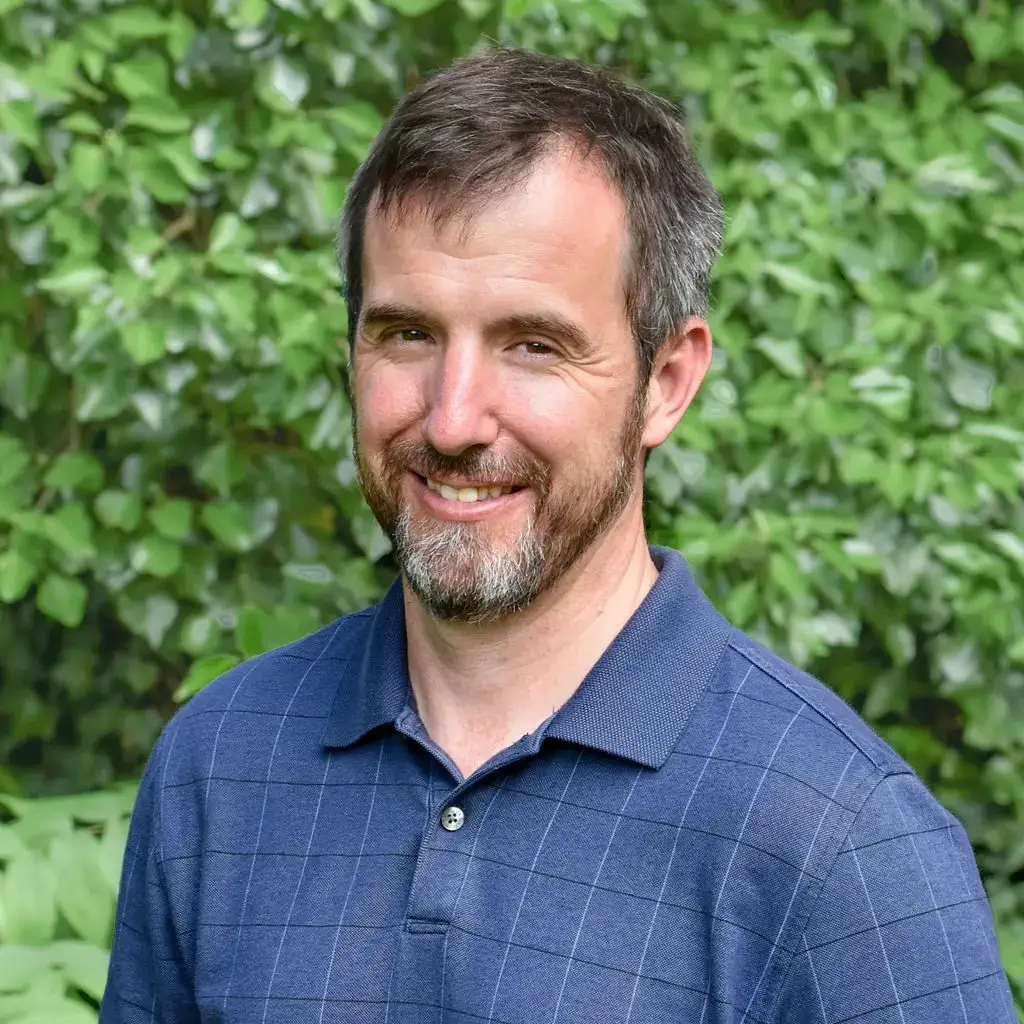
Jonathan Brush is the President and CEO of Unbound, a homeschool graduate, and a homeschool dad of six. He worked for nine years as a Director of Admissions for a private, liberal arts college, and then spent over ten years working in non-traditional higher education.
Jonathan loves Unbound and Unbound students and dreams every single day about new ways to connect them to each other. He gets to work with the world’s best team and the most amazing student body in the history of the world (which is just as awesome as it sounds), and field questions about Rule 4 violations (ask an Unbound student to explain). Jonathan and his family make their home in the Shenandoah Valley of Virginia.