


How to Make a Career Out of Writing: A Conversation with Robynne Miller
Quick Summary: On a recent episode of the BeUnbound Podcast, Robynne Miller shared how she went from business owner to published author and writing instructor. This interview explored her journey, niche strategy, fiction approach, and how she mentors students toward sustainable writing careers.
When we started the Be Unbound podcast, I didn’t realize how many phenomenally talented people we’d get to talk to. That streak has continued with a conversation I had recently, and I would love to share it with you.
This time, David and I were joined by Robynne Miller: writer, teacher, conference director, musician, homeschool mom, business owner, and our esteemed instructor for the Ascend writing track.
We already knew Robynne was a gifted writer and teacher. What we discovered in this conversation is just how far God has taken her willingness to lean into the passion He gave her—and how practical she is about helping other writers do the same.
If you’re interested in writing of any kind—fiction, nonfiction, corporate, creative—or you have a student who lights up around stories, our conversation will both inspire you and give you very concrete next steps.
Why Robynne Miller Chose Writing Over Business—and How It Became Her Calling
Robynne didn’t start out thinking writing could be her “real job.”
The future of education in your inbox.
Get productivity tips, commentary, and Unbound updates sent to you!
She listened to her mom, did the “sensible” thing, and went into business first. She owned multiple businesses, stayed home with her kids, homeschooled, and did all the normal life responsibilities. Meanwhile, she kept pushing her love of writing “to the side” for later—for after the kids, after work, after the real business of living.
Underneath that was something deeper:
- She didn’t grow up in a Christian home.
- She had to learn, later in life, what it meant to be in Christ, to have a calling and a gifting.
- She assumed anything she loved that much—like writing—couldn’t possibly be God-ordained, because it felt “too enjoyable” to be holy.
So writing was her “indulgence,” the little thing she would do on the side once the real work was finished.
But God didn’t leave it there. He pulled that passion forward.
Today, Robynne:
- Has 10 nonfiction books published
- Holds a nine-book contract for more
- Works as an editor and writing teacher
- Earned an MFA in writing
- Directs a Christian writers conference
- Is literally moving from the West Coast to the East Coast in part to pursue new writing projects
All of that started when she stopped treating writing as a guilty pleasure and started receiving it as a calling God had built into her from the beginning.
How Childhood Writing Shaped Robynne’s Passion and Purpose
For Robynne, her passion for writing grew out of a hard childhood.
She didn’t have a great home environment and books became both her escape and her education:
- She says she got “a lot of my parenting from books.”
- She read constantly.
- She watched how authors helped her navigate a difficult life.
Then she started to write.
As a nine-year-old, she was the kid who:
- Kept journals where she recorded her days, emotions, and questions in writing
- Wrote long, handwritten letters when other kids barely wrote at all
Writing helped her:
- Process pain and confusion
- Appreciate joy
- Ask better questions
- Connect with people
She was also a soccer player, a musician, and eventually a worship director at multiple churches. In the corporate world, she was the one writing the newsletters and collateral. Even when she tried to keep writing “in its place,” it kept oozing out of whatever she did.
The key test for her to determine whether writing was what she should pursue or not was simple:
Writing filled her up.
That’s how she knew it wasn’t just a passing phase. It was something God had planted deep inside her.
What Kind of Writer Is Robynne? Her “Plantser” Approach Explained
When the conversation on the podcast turned to fiction, Robynne introduced two classic writing terms:
- Plotters – those who outline everything: scenes, chapters, backstories, even collecting reference photos of their characters.
- Pantsers – those who “write by the seat of their pants,” sit down and say, “I wonder what’s going to happen today,” and discover the story as they go.
Robynne is somewhere in the middle. She calls herself a “plantser.”
She always knows:
- The story she wants to tell—the emotional journey, what she wants the character (and reader) to learn or wrestle with
- A strong sense of who her characters are
She doesn’t always know:
- Exactly what will happen (the plot)
- Who might “walk through the door” halfway through
And she likes it that way. If a “sister she didn’t know about” walks into the story, she knows that character is there for a reason—and she’s curious to find out what God is doing with that.
She also talked about how one of her close friends, author Francine Rivers, approaches fiction:
- God gives Francine something He’s working on in her own life.
- She writes a book to work through that issue.
- The different characters often represent different “voices”—accusations, Scripture, doubts, hope—arguing inside her own mind.
That idea has shaped how Robynne wants to write fiction too.
She believes:
- Fiction can reach people who would never pick up a “self-help” book.
- A good story can “come in the back door” of someone’s heart.
- You can slip “vegetables in the macaroni and cheese”—a lot of truth and “meat” inside something fun and entertaining.
When she teaches, her favorite workshop is called “What Are You Really Writing About?” It’s a series of exercises that reveals what God is doing in you right now and what He might be asking you to bring into the world through your words. She’s bringing that to one of our upcoming events—and she’s very excited about it.
How Robynne Found Her Writing Niche—and Turned It Into a Career
Here’s where Robynne’s business background really shows.
She has degrees in marketing, business, English, and voice. She jokes that she doesn’t really like school, but she loves learning.
Her nonfiction career didn’t start because a publisher came knocking. It started because:
- She went to a writers conference with a well-researched idea for a specific audience.
- Industry people dismissed it as a “dead” market—“that was the 1970s, that’s not now.”
- She actually had data that showed it was a sustainable, growing market worldwide—but no one wanted to look at it.
So she went home and decided to prove it.
In two weeks, she wrote a nonfiction book aimed at that audience. She self-published it.
Then a book to the same audience hit the bestseller lists (Amazon, New York Times, USA Today, etc.). Her book got swept up into the “If you liked this, you might also like…” recommendation stream and it sold extremely well.
That audience wanted more.
In response, Robynne looked at her own questions about that world—leaning specifically towards the “mean girl” from Little House on the Prairie, Nellie Oleson.
She wanted a redemption story. She wanted to picture Nellie as a grown woman who adopted puppies and dug wells in Africa and ran a soup kitchen.
Instead, she discovered:
- Nellie was a composite character based on three real girls from Laura Ingalls Wilder’s life.
- Two of them were, frankly, very difficult people.
- One wasn’t really a “Nellie” at all—just a rival for Almanzo’s affection.
Robynne wrote The Three Faces of Nellie, a kind of mini-biography of those women. She wrote it factually, even when their lives got messy, without turning it into tabloid drama.
That book solidified her as a “rock star in the Little House world”—the world expert on Nellie Oleson. That opened the door to more books, including Tennessee Wildcat, about the mysterious real-life inspiration behind the character Mr. Edwards.
What’s important isn’t just that she found a niche. It’s how she did it:
- She combined her love for a specific subject (Little House, that time period, historical puzzles)
- With her research skills
- And her business/marketing instincts
That combination—passion, preparation, and persistence—is exactly what she now teaches to other writers.
How Robynne Navigates the Challenges of Writing for Hardcore Fans
Given all that, you might think Robynne would write Little House–themed historical fiction. She absolutely could.
She absolutely won’t.
Why? Because she knows her audience.
Her first big speaking engagement to a Little House crowd was at “LauraPalooza”, an academic conference for hardcore fans and scholars. She was sandwiched on the “hard-hitters day” between:
- Bill Anderson, the godfather of Little House biography
- Pamela Smith Hill, editor of the annotated Pioneer Girl memoir
She describes herself in that lineup as “a slice of spam between two brioche buns.”
At one point, Bill—a legend in that world—slipped and mispronounced Almanzo’s name. The crowd gasped.
That was enough for Robynne.
She realized:
- This is an audience that knows every detail.
- They are emotionally invested in the characters.
- Many do not want to hear about flaws or uncomfortable realities in the lives of the real people behind the stories.
She’s happy to write accurate, well-researched nonfiction. She is not interested in writing a novel that imagines what Ma might have said in the kitchen one afternoon and then getting shredded by superfans for it.
So she keeps her fiction separate from the Little House universe and lets her nonfiction do the heavy lifting there.
What Are the Real Odds of Making a Living as a Writer?
One of the most practical parts of our conversation comes near the end, when Robynne addresses the numbers.
As part of the Ascend Writing Track, she shows students a video from award-winning author James L. Rubart, who says:
Only about 2% of authors make a living at it.
That’s a sobering statistic.
At the next class for the Writing Track, the students’ faces were completely different—less shiny-eyed, more sober.
But Robynne adds some crucial context:
- Not every “author” is trying to make a full-time living from writing.
- If you look only at the segment of writers who are trying, the number trying may be closer to 5% of the total pool.
- That would mean that 2% of all authors equals something like 40% of the ones who are actually committed to building a career.
Now those odds are still challenging—but they’re very different from “2% or bust.”
Robynne believes:
- Knowledge is power.
- Connections are everything in the writing industry.
Her own journey went from:
- Writer in a small writing group
- To president of a writing organization
- To director of a major Christian writers conference
At the Vision Christian Writers Conference, which she helps lead at Mount Hermon in California, she’s intentionally created:
- A very high faculty-to-attendee ratio
- An environment where walls come down between new writers and award-winning authors, agents, and publishers
- A “team Jesus” culture where industry veterans and beginning writers can talk face-to-face, pray together, and work side by side
Why does that matter?
Because when you sit across from an editor or agent, look them in the eye, and explain your project with passion and preparation, your proposal doesn’t just become another file in an inbox. It becomes a relationship—and that moves your work closer to the top of the pile.
Writing is solitary work. Conferences and communities like this keep writers encouraged, equipped, and surrounded by people who get it.
And Robynne doesn’t just talk about community—she invests in it. She has even set aside free spots at Vision for our Ascend Writing Track students, as part of her ministry to “younger” writers (not younger in age, but newer to the craft).
How Robynne’s Journey Shapes the Ascend Writing Track at Unbound
As I said coming out of this conversation, I’ve wondered if one of the most important roles Unbound might play for the Kingdom is as a place where young people are introduced to storytelling and the arts—and taught how to do those things well enough to matter.
We’re not only about writing. In fact, most of our students come to us for things that sound more “practical”: business, leadership, career direction.
But we also have a large group of students who:
- Love stories
- Love words
- Love art and music and images
- And have been told, usually, “That’s nice—but you should get a real job”
What makes Robynne so valuable to our Ascend Writing Track is that she refuses to stop at “follow your passion.”
She teaches our students to:
- Level up their craft
- Understand the market
- Learn the language of proposals and pitches
- Build connections
- And think about how to get paid to do the work they love
We see the same pattern across Ascend:
- Tracks as majors (like writing)
- Certificates as degrees
- A job guarantee that ensures you won’t just learn to write—you’ll also learn to work
We don’t promise you a writing job straight out of the gate. But we do aim to help you build a life where you can support both yourself and your calling— including, potentially, a full-time writing career.
Robynne’s story is a living example of what happens when you:
- Take your God-given passion seriously
- Add hard-won skills and education
- Learn to see opportunity in niche markets
- Plug into community and mentorship
At that point, you’re not just in the 2%. You’re in a completely different category of writer.
If any of this resonates with you—if you or your student light up around words, stories, and ideas—I’d strongly encourage you to listen to the full conversation with Robynne on the Be Unbound podcast.
And if you want to explore the kind of education that takes passions like writing seriously while also preparing you for real work in the real world, you can learn more about our programs at beunbound.us.
Until we talk to you again—be Unbound.
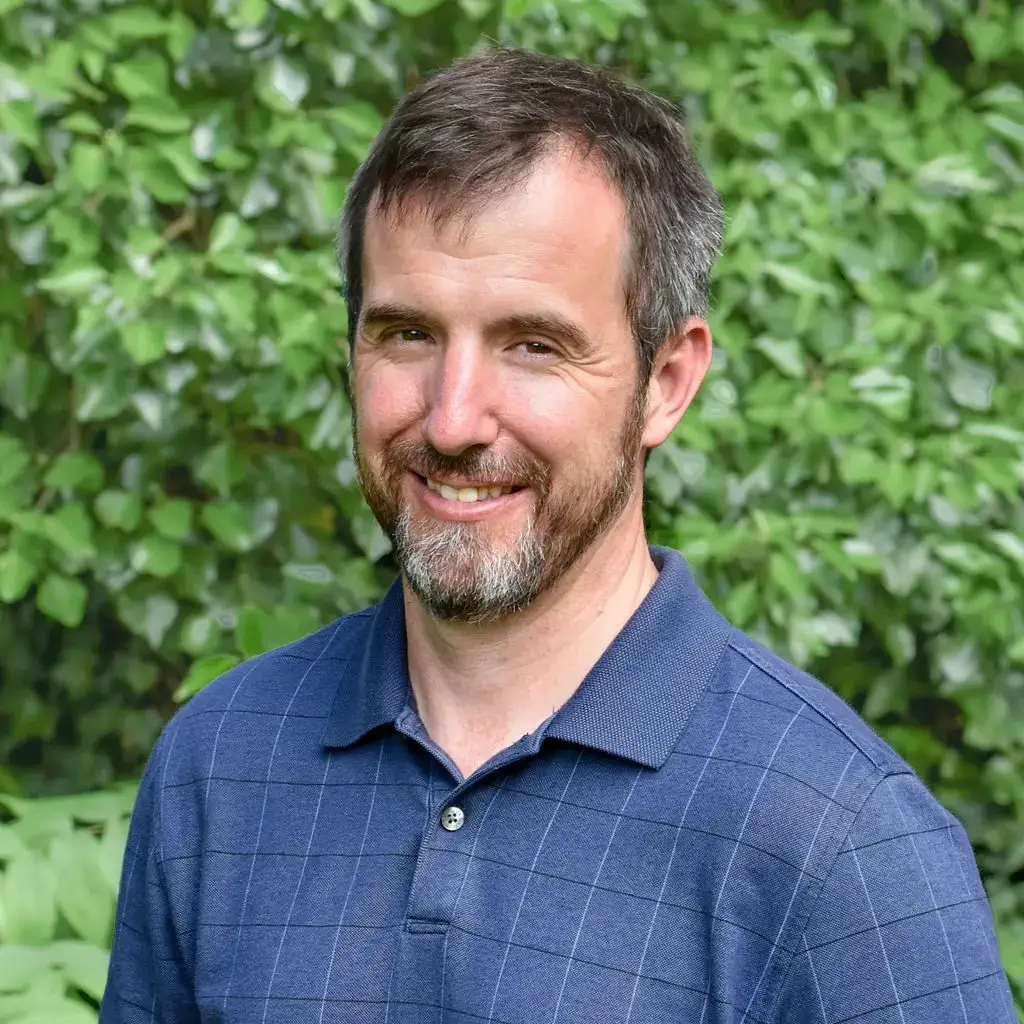
Jonathan Brush is the President and CEO of Unbound, a homeschool graduate, and a homeschool dad of six. He worked for nine years as a Director of Admissions for a private, liberal arts college, and then spent over ten years working in non-traditional higher education.
Jonathan loves Unbound and Unbound students and dreams every single day about new ways to connect them to each other. He gets to work with the world’s best team and the most amazing student body in the history of the world (which is just as awesome as it sounds), and field questions about Rule 4 violations (ask an Unbound student to explain). Jonathan and his family make their home in the Shenandoah Valley of Virginia.