


The Stories that Stay (Victoria Schurter at Capstone)
Quick Answer: In this keynote session for the Capstone event in the Ascend program, Victoria Schurter explains why stories shape faith, how hope is more of a discipline than a feeling, and what it means to choose truth when life hurts.
In a recent episode of the Be Unbound Podcast, we featured Victoria Schurter’s Capstone event keynote, “The Stories that Stay.” This is a session that deserves the spotlight. Victoria explores why stories matter (life has an Author, truth resonates, and choices shape us) and how hope is a deliberate, bedrock decision—especially when life hurts.
Who Is Victoria Schurter?
You’ve probably encountered Victoria’s work even if you haven’t met her. She runs Equip and Explore, our high school programs, and she’s authored a colossal amount of the content that keeps blessing students and families. I can’t count how many parents told me on a recent tour, “My son or daughter is in Equip—and it changed their life.” That’s Victoria’s fingerprint.
Before we dive in, here’s a quick story just to give some context to who Victoria is:
Years ago, we hired a law firm to review some complex documentation we’d created. The attorney assumed we’d already retained legal counsel because the work was so precise—work that, in his experience, only trained attorneys could do. We hadn’t. Victoria had done it. No fanfare. No complaints. She just did the hard thing. That’s the caliber of person you’re going to hear from. And one of her great passions? Stories—on paper and in people.
What Makes a Story Spiritually Powerful?
Victoria began her session at Capstone by asking a simple question: What is a story? Her working definition is clear and human-sized—“a series of meaningfully interconnected moments with a beginning, a middle (change, usually via crisis), and a resolution.”
The future of education in your inbox.
Get productivity tips, commentary, and Unbound updates sent to you!
Facts alone (“Bob went skiing”) don’t move us. We either ignore them or instinctively build them into a story so they matter.
If Christianity is true—if life has a design and an Author—then life itself is a Story with a capital “S”: creation, fall, redemption, and restoration.
That’s why a non-ending grates at us and a cliffhanger begs a sequel.
We’re built to expect beginnings, middles, and real resolutions. And it isn’t just humanity that matters in the abstract—our individual lives carry meaning because we bear God’s image (Imago Dei).
Hard chapters don’t erase that meaning; pain doesn’t cancel purpose. Our lives and our stories matter because they have an Author.
Why Do Honest Stories Matter in Faith and Life?
Why do some shows flop? Why do some novels feel thin?
Often, because something doesn’t ring true. We can see bad acting; we can sense disingenuous writing; we know when a choice doesn’t fit the character or world.
Even in fiction—and Jesus’ parables—what we love is reality beneath the make-believe: the human condition told honestly. We don’t live in Middle-earth, but we know what it’s like to leave home, suffer loss, and choose courage.
Victoria ties this to relationships: genuine relationships require genuine stories—honesty with God, with ourselves, and with others.
Only truth forges a story that lasts.
How do the Choices in a Story Shape Us?
Great stories are really a series of choices.
Events—often beyond the character’s control—force responses. Choice after choice shapes who they become. Flat characters who never change? Forgettable. In our lives, even the smallest, seemingly mundane event still happened.
God saw. He does not forget.
When you’re tempted to think, No one will know, it won’t matter, the truth is: it matters in eternity.
Which brings us to hope.
How Does Storytelling Help Us Find Hope in the Suffering?
At our Capstone event, we spend a whole day on story and a whole day on hope. Why? Because the reason stories matter and the reason hope exists are the same.
Samwise Gamgee says it best:
“It’s like in the great stories, Mr. Frodo… Folk in those stories had lots of chances of turning back. Only they didn’t… There’s some good in this world… and it’s worth fighting for.”
That’s not sentiment. That’s how hope is forged in real life:
Childhood dreams—horses and beaches—give way to watching your military dad deploy, hearing that his friend was shot down, and facing loneliness for the first time.
Family suffering compounds: a mom’s cancer and surgeries, years wrestling with OCD, a sibling’s lifelong illness, and later, the grief of losing a baby. These are the “full of darkness and danger” chapters.
So what is hope here?
Victoria points to Easter morning in John’s Gospel: Mary goes to the tomb “while it was still dark.”
That detail matters.
In the dark—physically, emotionally—God sets the stage.
And then the linchpin: if Christ has not been raised… our faith is empty; we are to be pitied.
But in fact Christ has been raised from the dead.
If that’s true, everything changes: suffering isn’t meaningless; restoration is coming; the sun is rising; the darkness loses.
Hope, then, is not a wiffle ball—light, hollow, and easily blown off course. Hope is bedrock you can build on even when feelings are not there.
The faithful life becomes a pattern of choosing to align thoughts and actions with that reality, again and again.
Hope is a process, not a switch.
The Stories That Stay: A Family Thread
To show how decisions ripple across generations, Victoria highlighted her own family’s story:
- A little boy is born into abuse. He doesn’t give up.
- He grows up strong, attends a military academy, and marries an officer’s daughter.
- It’s 1939. He ships out. Third wave at Omaha Beach. His unit helps liberate a concentration camp. He rarely speaks of it afterward. He chooses to keep going.
- After the war, the family returns to Germany to help rebuild.
- His daughter later marries an alcoholic; the marriage ends when the youngest grandson is six.
- That grandfather steps in—brings the boy to live with him, teaches him about manhood, finances, family, and caring for others.
- That little boy grows up to be Victoria’s dad.
Every decision made along the way came with “lots of chances to turn back.” Those choices shaped a grandson, then a daughter, and—by extension—many of you reading this now.
You may never see the full impact of your faithfulness in your lifetime.
But your choices matter. Your hope matters. God does not forget.
Hold Fast (and Be Held)
Let’s reframe Sam’s question from the beginning.
It’s not only what we hold onto—it’s who is holding us: the Author of life, the God of truth, the One who works all things for good and promises ultimate redemption.
In our stories, we get many chances to turn back. Only we don’t. Because there is good in this world worth fighting for—and because the One who conquered the grave holds us fast.
Listen to the Full Session
If this summary stirred you, listen to Victoria’s full Capstone session, “The Stories that Stay,” on the Be Unbound podcast—and share it with someone who needs courage to make a decision or hope to keep holding on even when they can’t see what’s next.
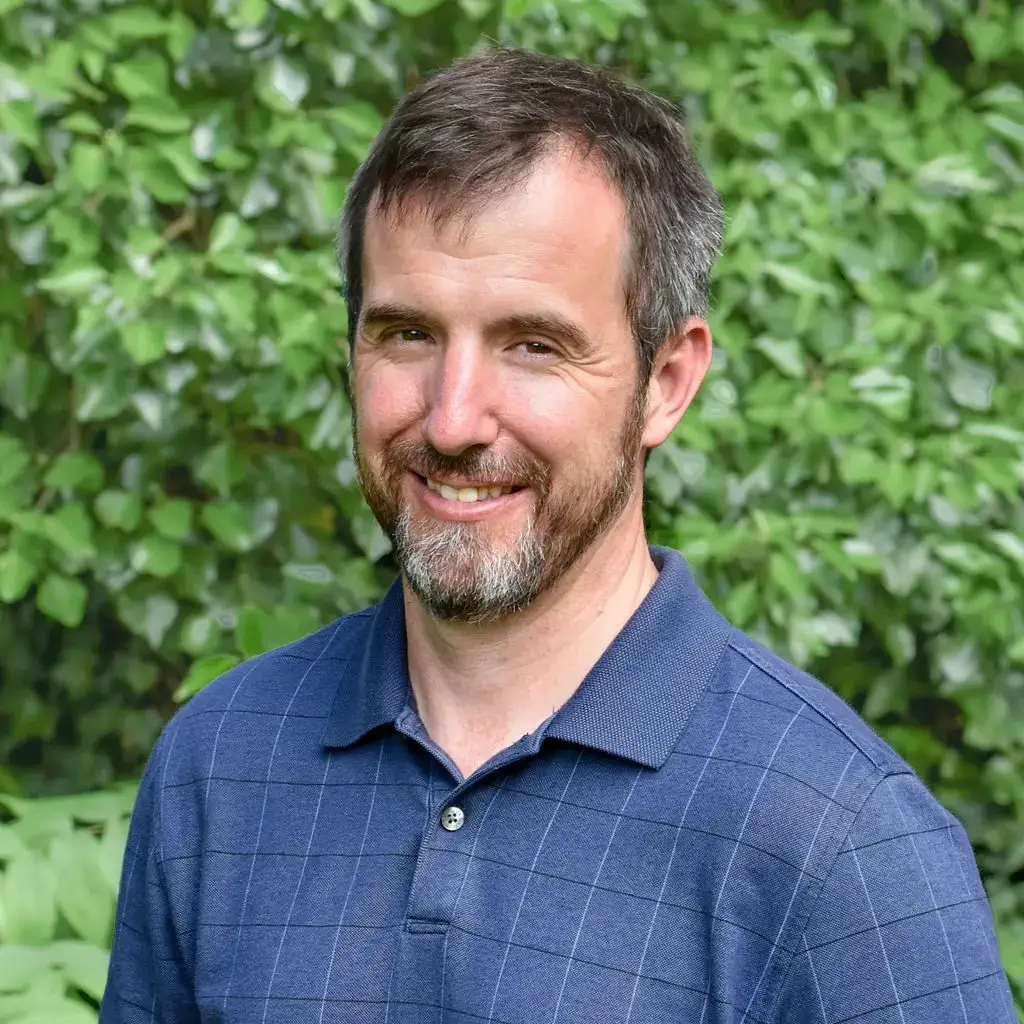
Jonathan Brush is the President and CEO of Unbound, a homeschool graduate, and a homeschool dad of six. He worked for nine years as a Director of Admissions for a private, liberal arts college, and then spent over ten years working in non-traditional higher education.
Jonathan loves Unbound and Unbound students and dreams every single day about new ways to connect them to each other. He gets to work with the world’s best team and the most amazing student body in the history of the world (which is just as awesome as it sounds), and field questions about Rule 4 violations (ask an Unbound student to explain). Jonathan and his family make their home in the Shenandoah Valley of Virginia.